About GE Fish

About Genetically Engineered Fish

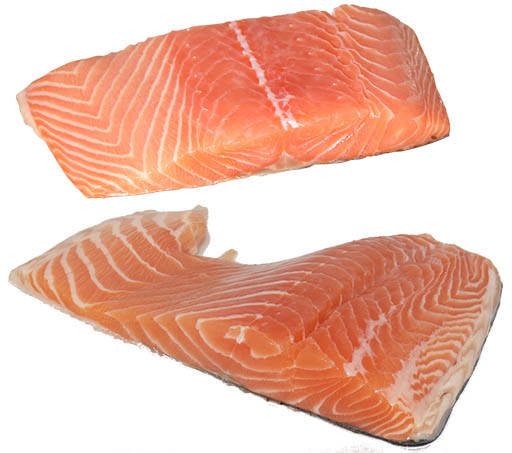
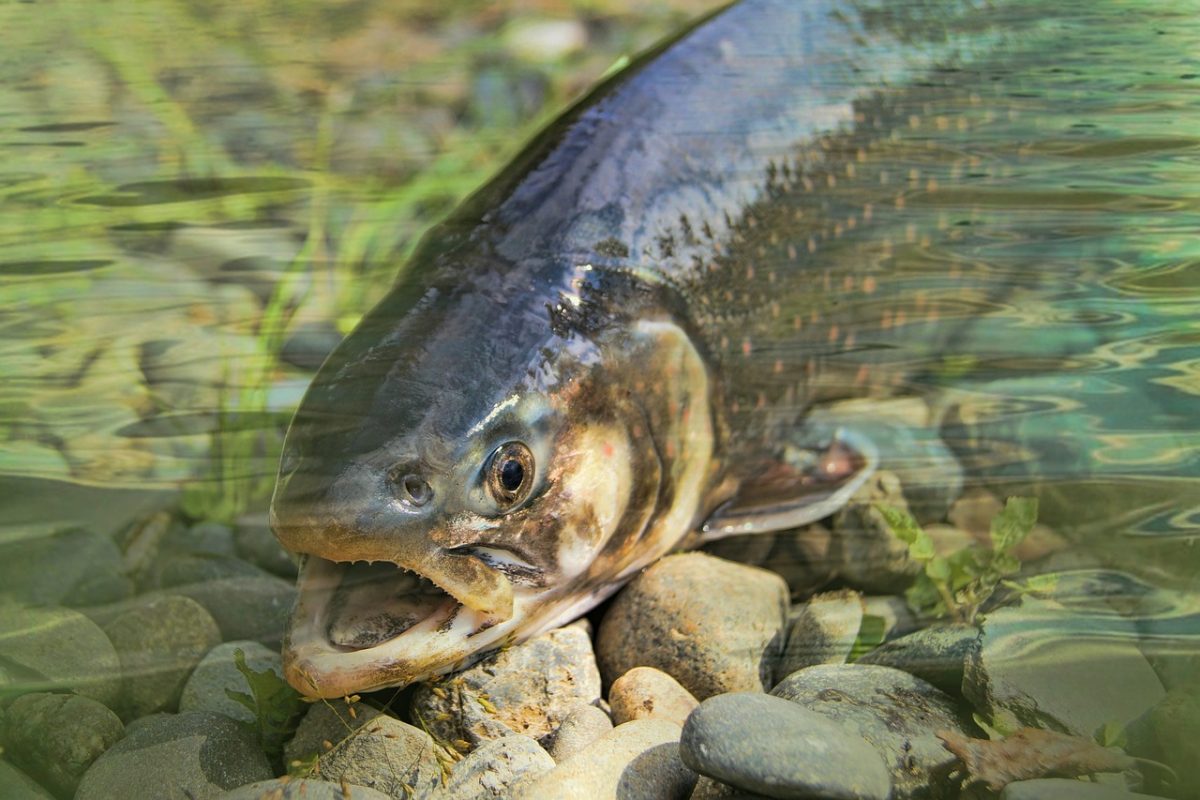
On August 25, 2010, U.S. Food and Drug Administration (FDA) officials announced their process for making a decision on an application relating to the first genetically engineered (GE) animal intended for human consumption, the AquAdvantage Salmon produced by AquaBounty Technologies (Docket No. FDA-2010-N-0001).  The agency also announced a public hearing and public comment period on labeling of the GE AquAdvantage salmon (Docket No. FDA-2010-N-0385). The genetically engineered Atlantic salmon being considered was developed by artificially combining growth hormone genes from an unrelated Pacific salmon, (Oncorhynchus tshawytscha) with DNA from the anti-freeze genes of an eelpout (Zoarces americanus).  This modification causes production of growth-hormone year-round, creating a fish the company claims grows at twice the normal rate, allowing factory fish farms to crowd fish into pens and still get high production rates.

GE Fish Threaten the Environment and Wild Salmon
Genetically engineered fish pose serious risks to wild populations of fish and our marine environment.  Each year millions of farmed salmon escape from open-water net pens, outcompeting wild populations for resources and straining ecosystems. Even in land-based facilities salmon have the ability to escape where they will be virtually impossible to recover.  We believe any approval of GE salmon would represent a serious threat to the survival of native salmon populations, many of which have already suffered severe declines related to salmon farms and other man-made impacts.   

Escaped GE salmon can pose an additional threat – genetic pollution resulting from what scientists call the “Trojan gene” effect. Research published in the Proceedings of the National Academy of Sciences notes that a release of just sixty GE fish into a wild population of 60,000 would lead to the extinction of the wild population in less than 40 fish generations.

If the FDA opens this door, GE fish will likely be among the millions of salmon that currently escape into the wild every year.  This could be the last blow to wild salmon stocks.

According to information provide to the FDA by AquaBounty, the company will raise the GE eggs in a facility on Prince Edward Island in Canada, and then it will ship those fish to be raise in a land-based facility in Panama where the fish will be grown out and the processed before being shipped for commercial sale. As noted, these GE fish are intended for use on a global scale yet a reliable containment regime following commercialization is just not conceivable. For example, according to a 2001 report, the Environmental Risk Management Authority in New Zealand identified flaws in the safety system of the GE salmon tanks of the private company King Salmon where GE salmon eggs could have come into contact with sperm before escaping into the environment. This example highlights the difficulties in designing safety measures which are 100% effective.

Additionally, most salmon farmers in the real world ply their trade in low-lying coastal areas and competing corporations will no doubt race to produce GE fish in crowded open ocean facilities already in use for fish production.  While FDA may place initial restrictions on the farming of GE fish, we do not know how long it will be before FDA gives into pressure from corporations wishing to replace open ocean fish farms with the GE variety.

Even if grown in contained, land-based facilities, the “farming” of fish raises serious environmental risks, and even indoor ponds typically recirculate water into the environment, an escape route for fish or eggs. Additionally, raising GE fish in “inland waters” – presents novel threats to our nation’s lakes, rivers, and estuaries – many of which are already under attack by invasive fish species like the Asian carp and Northern snakehead.  The farming of fish and seafood, often referred to as aquaculture, is one of the fastest growing threats to our water environments and native species. Rapidly increasing demand for fish and fish products has outpaced our regulatory agencies’ ability to manage emerging environmental and human health threats from the burgeoning aquaculture industry. In the absence of minimal state and national regulatory standards, this country’s 4,000 aquaculture facilities are largely left to their own designs.

The environmental problems arising from the industry are altering the biodiversity of entire ecosystems. In addition to the threat of these GE salmon displacing native salmon populations, such fish farming encourages the propagation of deadly fish diseases, the concentration of harmful wastes and industrial drugs and chemicals escaping into open waters, and the over-fishing of vast quantities of non-commercial fish to feed carnivorous farmed fish, such as salmon; it generally takes three pounds of wild fish to grow one pound of farmed salmon[1]. Since these salmon have been engineered for fast growth, it stands to reason that their feed requirements will be even higher. Wild Atlantic salmon are already on the Endangered Species List in the U.S.; approving these GE Atlantic salmon will undoubtedly be the last blow to these wild stocks.

The AquaBounty company also says that it will only produce sterile females; however fish are known to change sex and there is no guaranteed method to produce 100% sterility. According to data the company submitted to the FDA up to 5% of its fish will not have been effectively sterilized[2]. FDA has difficulty tracking salmonella in hen eggs; to believe that the FDA can track whether salmon eggs are sterile or not is ludicrous. Moreover, the company will need to keep stocks of fertile fish to produce additional offspring. At present, these fertile fish are being reared on Prince Edward Island, Canada in the middle of the historic range of Atlantic salmon.

GE Fish Threaten Human Health
As the long-shelved AquaBounty transgenic salmon is the first genetically engineered (GE) animal intended for human consumption, the importance of thorough human health studies and consumer opinion can not be understated. This animal should not be approved for human consumption until further study indicates that they are safe for consumers and the environment.

We are very concerned about the potential toxicity, allergenic effects, and diseases posed by the commercialization of transgenic fish.  While data on human health impacts of GE fish is sparse, especially since FDA has yet to share the data it has reviewed, some recent studies have provided cause for serious concern. For example, the routine use of antibiotics to control diseases often found in farm-raised fish may already be impacting human health. Some research has suggested that transgenic fish, including that presented by the FDA for the approval of the AquAdvantage salmon, may be susceptible to more diseases than fish currently grown in aquaculture facilities.[3]  Consequently, the amount of antibiotics given to transgenic fish may be higher than the amount currently given to farmed fish; already farmed salmon are given more antibiotics than any other livestock by weight. By eating farmed fish treated with antibiotics humans will be ingesting antibiotics that may be harmful.Indeed, some antibiotics are toxic and can even cause fatal allergic reactions.[4]  Finally, the use of antibiotics in aquaculture also exacerbates the significant problem of antibiotic resistant bacteria. The potential human health concerns connected with the use of antibiotics in aquaculture, including the unique role transgenic fish may play in exacerbating such use, must be fully assessed by FDA. The feed given to farmed salmon often also contains questionable additives and dyes to artificially turn farmed salmon’s grayish flesh more pink and appetizing to consumers.

FDA’s decision to go ahead with this approval process is misguided and dangerous, and is exacerbated by the lack of any publicly available data. FDA has been sitting on this application for 10 years and yet it has chosen not to disclose any data about its decision until just a few days before the public meeting. While the lack of transparency by FDA prevents the public from submitting informed public comments at the meetings, the absence of a public comment period on the approval of GE salmon following the VMA Committee meetings prevents the public from providing the Committee with relevant scientific studies and data as well as additional stakeholder comment following the meetings and deadline release of all available data. Holding a comment period solely on labeling presupposes the GE salmon will be approved, without proper public comment solicitation or review.

We all know there is a great appetite for salmon, but the solution is not to “farm” genetically engineered versions to put more on our dinner tables; the solution is to work to bring our wild salmon populations—and the ecosystems they depend upon—back. The approval of these transgenic fish will only exacerbate the problems facing our marine environments.

The Center for Food Safety strongly opposes the approval of these genetically engineered salmon and urges FDA to reject GE salmon. Should FDA decide to approve the AquAdvantage GE salmon despite our opposition, clear, mandatory labeling is an absolute must to allow consumers to make informed purchasing decisions.
View FDA documents on AquAdvantage GE salmon

Government Regulation of GE Fish

Although there are serious threats posed by genetically engineered fish, on the federal level, only the US Food and Drug Administration (FDA) has asserted jurisdiction over these fish (due to CFS’ legal work). In 2001, CFS filed legal petitions with the federal agencies that should have asserted jurisdiction over genetically engineered fish. While CFS’ efforts have been successful in pushing the environmental agencies to get involved in the regulation of genetically engineered fish, if endangered species are threatened, the scope of the environmental federal agencies’ jurisdiction over the issue is limited. Therefore, it is imperative that the individual states fill in the legal gaps. It is critical that each state adopt its own comprehensive set of regulations over these fish in order to prevent harm to the states’ unique fish and wildlife. 

State Regulations
 
May 2005
State Regulations for Genetically Engineered Fish
View List
 
May 2005
Alaska enacted legislation that requires the labeling of all products containing genetically engineered fish and shell fish. Senate bill 25, which introduced the legislation states that all genetically engineered fish will be “conspicuously labeled to identify the fish or fish product as a genetically modified fish or fish product,” whether packaged or unpackaged.  The law is intended to protect the state’s fishing industry. SB 25 was approved unanimously by the House and Senate.
View Regulations

January 2004
The Michigan legislature passed SB 226, which defines genetically engineered organisms and empowers the Department of Natural Resources to adopt rules to prohibit their release into state waters. It also authorizes the department to grant permits and establishes penalties for violating the law like fines, prison time, and possible natural resource damages.
View Regulations

 
August 2003
California Legislature Passes Ban on Introducing Genetically Engineered Salmon to Ocean Water
View Senate Bill
 
February 2003
California’s Final Regulations on Genetically Engineered Fish (Title 14, Sections 1.92, 671, 671.1)
View Regulations

December 2002
Washington Prohibits Use of Genetically Engineered Fish Within State Boundaries
View Washington Regulations

March 2002
Oregon Rules on Genetically Engineered Fish:
The Oregon Department of Fish and Wildlife considers releases of transgenic fish to pose a serious risk to wild populations. Under this rule, the Department does not authorize the release of transgenic fish into locations where such fish may gain access to wild fish populations. (Oregon Administrative Rules 635-007-0595.)
View Rules

March 14, 2001

Governor Parris N. Glendening signed into law a bill that prohibits release of genetically engineered fish into any state waterway connected to another body of water
View Maryland Bill

Federal Regulations

July 1, 2005
Congressional Research Service report to Congress on Genetically Engineered Fish and Seafood
View Report

October 30, 2001 
Fish and Wildlife Service and National Marine Fisheries Service Submit Letter to Food and Drug Administration in regard to Endangered Species Act
View letter

 
International Regulations

June 1997

The North Atlantic Salmon Conservation Organization (NASCO) Guidelines for Action on Transgenic Salmon
View NASCO Guidelines


References:

[i] Naylor et al, Effect of Aquaculture on World Fish Supplies. Nature, Vol.405, June 29, 2000, pg.1017-1024 and Dr. Rebecca Goldberg, Murky Waters: Environmental Effects of Aquaculture in the United States. Environmental Defense Fund, October 1997.

[ii] William Muir et al., Possible ecological risks of transgenic organism release when transgenes affect mating success: Sexual selection and the Trojan gene hypothesis, 96 PNAS 13853-13856, at 13853 (Nov. 23, 1999).

[iii] Rebecca Goldberg and Tracy Triplett. Murky Waters: The Environmental Effects of Aquaculture in the U.S. (p 44). Environmental Defense Fund (1997).

5 Responses

  1. [...] modified foods to allergic reactions, while other research suggests that transgenic fish may be more susceptible to disease. To treat those maladies, GE salmon producers would likely rely on antibiotics and other chemicals, [...]

  2. [...] environmentalists, and lawmakers have already formed a coalition to fight against the genetically engineered fish, citing concerns for consumers’ health, the environment, and wild salmon populations. There are [...]

  3. [...] Learn more at the Center for Food Safety [...]

  4. [...] Learn more at the Center for Food Safety [...]

  5. [...] horror show, but instead – it could be on your dinner plate.   The FDA is set to approve genetically altered salmon for distribution in our food supply towards the end of this month.  This is a scary development [...]

Leave a Reply

Fill in your details below or click an icon to log in:

WordPress.com Logo

You are commenting using your WordPress.com account. Log Out / Change )

Twitter picture

You are commenting using your Twitter account. Log Out / Change )

Facebook photo

You are commenting using your Facebook account. Log Out / Change )

Connecting to %s

Follow

Get every new post delivered to your Inbox.